Use this QUIZLET to practice some of the words in Sweet tooth (Ch1)

Use this QUIZLET to practice some of the words in Sweet tooth (Ch1)
Read Sweet tooth (Ch1) again. Without looking at it, decide if the following statements are true or false
1. Wendy hates going to see a dentist.
2. Wendy works in SuperSave.
3. SuperSave is a supermarket.
4. Tracey and Wendy have been working together for three years.
5. Tracey attended the same school as Wendy.
6. Tracy and Wendy normally work four days a week.
7. The closest dentist to Wendy and Tracey is in Eastfields.
8. Tracy doesn’t recommend the new dentist that she has found.
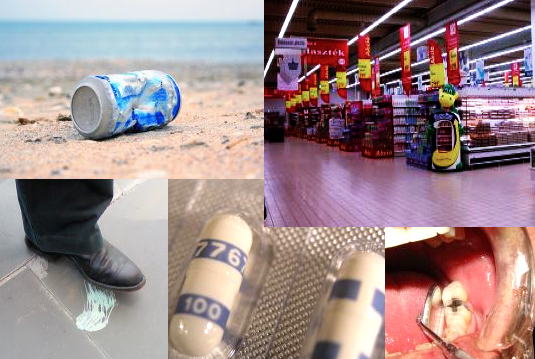
Match these words from Sweet tooth (Ch1) to the pictures:
tooth
can
painkiller
chewing gum
supermarket
INFINITIVES
1. Look at this sentence from Sweet tooth (Ch1):
“Jobs were hard to find”
In this sentence, the basic structure looks like this: Subject + to be + adjective + infinitive
2. Complete the following sentences using the correct adjective + infinitive
simple to use/difficult to change/difficult to answer/easy to read/difficult to understand
a. Their accents were ______, so I asked them to repeat what they said.
b. The book was ______, so I finished it in just three days.
c. One of the exam questions was ______, so I went back to it later and tried again.
d. The tire was ______, but luckily there was a garage nearby.
e. The iPhone 5 is ______, but it is quite expensive.
For more practice with infinitives, try this site: http://www.grammar-quizzes.com/infinitive4.html
Practise some of the words from The Piper using this QUIZLET.
Look at our new very short story called The Piper in the section called ‘FLASH FICTION’.
‘Think‘, ‘know‘, ‘feel‘, ‘wish‘, ‘see‘ and ‘guess‘ are common verbs in English. Often the verbs follow this pattern: SUBJECT +VERB + THAT + NOUN CLAUSE. For example, ‘The piper thought that the man was about fifty years old‘. In this example, the SUBJECT = ‘The piper‘, the MAIN VERB = ‘thought‘, and the NOUN CLAUSE = ‘the man was about fifty years old‘. The subject of the noun clause = the man, and the verb in the noun clause = was.
A. Put these sentences into the correct order.
1. | wished | that he |speak | languages| a hundred | The piper | could
2. | that | The piper | the man | Scottish | guessed | was
3. | felt | a happy | cheer | The piper | that | tune | would | him up
4. | he had | at least | The piper | that | knew | to get |every day | ten pounds
5. | the woman | The piper | gave | saw | him a pound |that
B. Complete these sentences
1. The piper thought that the man was about fifty because…
2. The piper saw that he could stop playing soon because…
3. The piper wished that everyone would give him ten pounds because….
4. The piper wished that he could tell people to run away because….
Read the Lake (Ch16) again and complete the following sentences using either ‘before’ or ‘after’.
1. Sheriff Farley arrived at Ben Green’s garage ______ Big Donnie Brown got there.
2. ______ Sheriff Farley parked his car, Big Donnie arrived.
3. ______ Sheriff Farley sent Donnie the blackmail letter, he would be rich.
4. Sheriff Farley put on the grey wig ______ Donnie Brown left Ben Green’s garage.
5. ______ Sheriff Farley opened Donnie’s front gate with a skeleton key, he drove all over the property in the red Ford.
6. ______ Sheriff Farley heard the noise of the shutters falling, he saw Donnie walk towards the grey Buick.
7. Sheriff Farley thought about his pension ______ he followed Donnie.
8. ______ Donnie drove off, Sheriff Farley stamped on the accelerator pedal.
THE PAST PERFECT
The past perfect looks like this: had + past participle
In relation to a simple past tense, the past perfect is often used to move to an earlier past.
Look at this sentence from The Lake (Ch16): ‘He yawned and looked at his watch. It was only 8pm. He hadn’t had a good night’s sleep in weeks.’
The yawn and the look took place in the past – the use of the simple past tense indicates this. However, the lack of ‘a good night’s sleep’ (which means the person slept badly) happened BEFORE the yawn and BEFORE the look. The past perfect has taken the narrative into a more distant past – a time before the other two events (yawn, look)
Here is another example from the Lake (Ch16): ‘Farley started up the engine of the old Ford. He had had to deal with lots of criminals over the years – and a lot of bent cops.’
Are the following statements TRUE or FALSE?
1. ‘Farley started up the engine’
This is an example of a sentence that uses the past perfect
2. Farley started the engine BEFORE he dealt with a lot of criminals
3. ‘He had had to deal with a lot of criminals’
This is an example of a sentence that uses the past perfect
4. Farley dealt with the criminals AFTER he started up the engine
For more practice with the past perfect, visit this site:http://www.bbc.co.uk/worldservice/learningenglish/grammar/learnit/learnitv210.shtml
Use this QUIZLET to practise the vocabulary of The Lake (Ch16)
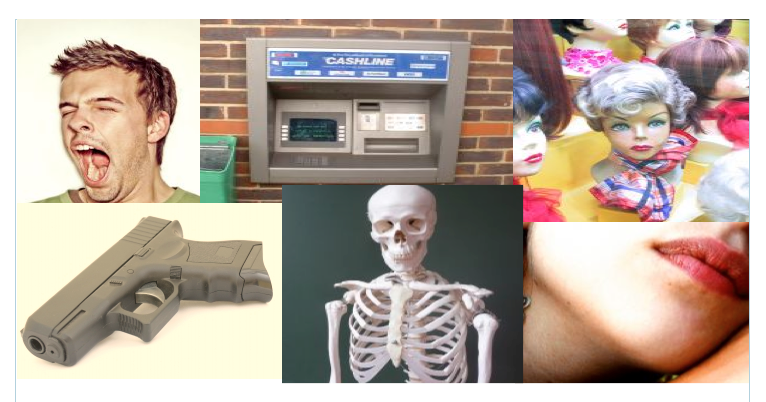
Match the pictures below to these words:
1. a skeleton
2. a chin
3. a yawn
4. an ATM (Automatic Teller Machine)
5. a pistol
6. a wig
Read The Lake (Ch15) and then join parts a, b, c, d and e with i., ii, iii, iv and v
a. Ben Green checked his ledger because
b. Donnie Brown probably wants the Mercedes fixed as soon as possible because
c. The Mercedes will be expensive to repair because
d. Ben Green probably doesn’t want to go to his apartment upstairs because
e. Ben Green thinks Cindy Duke is lucky because
i.he feels lonely there.
ii.he wanted to tell Donnie when he could return the car.
iii.she survived a bad car accident.
iv.it is badly damaged.
v.he dislikes driving the Buick.
DEFINING RELATIVE CLAUSES USING ‘THAT’
1. ‘The house that Annie Baker lived in was next to the lake.’
In this sentence, the main verb = ‘was‘.
The defining relative clause adds important information to the basic sentence. The defining relative clause = ‘that Annie Baker lived in‘. In this sentence, the defining relative clause gives us more information about the house. Because of the defining relative clause, we know that we are talking about Annie’s house and no one else’s.
The basic sentence = ‘The house was next to the lake’.
2. Look at this sentence from The Lake (Ch15): “He opened a ledger that he held in his hands.”
a. What is the main verb?
b. What is the defining relative clause?
c. What is the basic sentence?
3. Look at another sentence from The Lake (Ch15): “The office car that he was using was outside.”
a. What is the main verb?
b. What is the defining relative clause?
c. What is the basic sentence?
4. Can you re-arrange these fragments to make sentences?
a. |a Mercedes| |that Donnie Brown| |was| |The car| |usually drove|
b. |lived in| |was| |above the| |garage| |The apartment| |that Ben Green|
c. |rushed past| |was| |that| |The car| |a red Ford| |Ben Green|
Use this QUIZLET to practise some of the vocabulary from The Lake (Ch15)
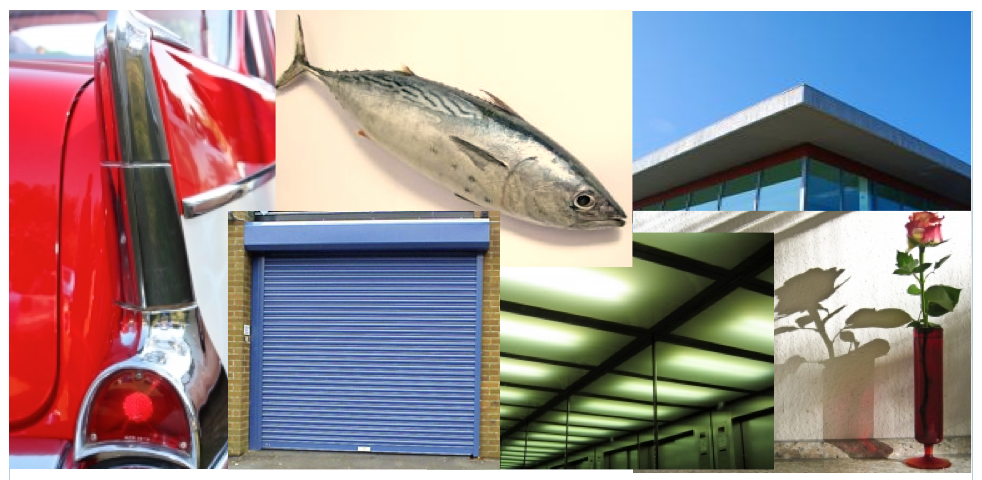
Match these words from The Lake (Ch15) with the pictures
1. a tuna
2. a steel shutter
3. a corner
4. a shadow
5. a tail light
6. neon lights
1. Match the verbs with their meaning
a. continue b. stare c. pound d. approach e. scratch f. repeat g. resume
i) to rub with one’s fingernails (especially if something is itchy)
ii) to start again after stopping
iii) to not stop, to keep doing something. (It can also mean to start again after stopping)
iv) to do the same thing again
v) to look hard at something for a long time
vi) to hit
vii) to go or come towards
2. Look at the verbs in #1 above. Which verbs are ‘regular’?
3. Here are more verbs from The Lake (Ch14). What are their simple past tenses?
a. stand
b. think
c. have
d. sleep
e. is
f. say
Practice the words from The Lake (Ch14) using this link to QUIZLET
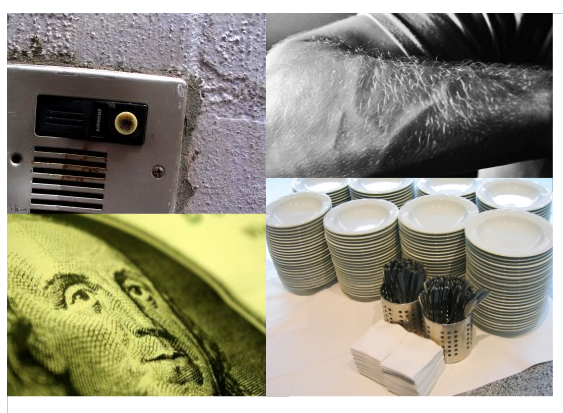
Match these words from The Lake (Ch14) with the pictures
plates
Benjamins
an arm
a buzzer
Complete the sentences about The Lake (Ch13) using these words:
deliver
bend
oblivious
interior
schmuck
exterior
1. Cindy was approaching a __________ in the road when the red Ford hit the Mercedes.
2. When Cindy told Sheriff Farley about the red Ford, she was __________ to his reaction.
3. Cindy was trying to _________ the Mercedes to Donnie quickly and return home.
4. The __________ of the Mercedes was clean because the garage did a good job of washing it.
5. Cindy thought her partner was a real __________.
6. The clock that Cindy checked was part of the Mercedes’s __________.
Read The Lake (Ch13) and then, without re-reading it, see if you can answer these questions
CHOOSE THE CORRECT ANSWER
1. According to the car’s clock, what time was it?
A. Half past eight
B. Half past nine
C. Half past ten
D. Midnight
2. Cindy’s partner is
A. Jack Hogan
B. John Higgins
C. Jack Hillman
D. John Holman
3. When the Mercedes stopped, what was it against?
A. A tree
B. A road sign
C. A fence
D. A wall
4. Why did Cindy Duke crash?
A. The car behind flashed its headlights
B. The car behind was travelling too fast
C. The surface of the road was wet
D. The car behind hit the rear of the Mercedes
5. What did Sherriff Farley want to cover the old Ford car with?
A. Red Paint
B. Mud and slime
C. Soap and water
D. Polish
TRUE OR FALSE?
1. Cindy met her partner for the first time at college.
2. Cindy was hurt badly in the crash.
3. Cindy had to find a public phone in order to call the Sherriff.
4. Sherriff Farley spoke to Daisy first, then Cindy.
5. Cindy couldn’t remember any details about the car that was behind her.
Hard, hard, harder, harder and hardly!
HARD as an adjective. ‘Hard’ is an adjective that can mean ‘tough/difficult’. For example, ‘It’s a hard question to answer’ means I find the question difficult to answer.
Also, ‘hard’ as an adjective can mean ‘not soft’: ‘I can’t eat this apple: it’s too hard’. This means the apple is not soft enough.
‘Harder’ is a different kind of adjective. It is a comparative. It compares two things. In this sentence, ‘The exam was harder than I expected.’ The comparison is across two exams: the ‘imaginary one’ and the ‘real one’. Unfortunately, the one in my mind was easier than the real one!
HARD as an adverb: ‘Hard’ can be an adverb too. For example, ‘I had to run hard to catch the bus’. In this sentence, ‘hard’ describes how I ran. The sentence means I had to run a lot to catch the bus.
‘Harder’ is a different kind of adverb. It is an adverb of comparison. It means – in the example coming up – I did something ‘more than before’. For example, ‘I ran harder yesterday to catch the bus than I did today because I was tired.’ The comparison is of how I ran across two times: yesterday and today. Of course, ‘harder’ can be used to talk about more effort in the future too. For example, ‘I’ll study harder for the English exam’ (compared to the studying I did for a different exam).
HARDLY as an adverb: ‘Hardly’ is an adverb. It means ‘almost not at all’. For example, ‘He hardly ate anything’ means he ate very little food.
PRACTICE
A. Is the underlined word an adjective (1), a comparative (2), an adverb (3) or an adverb of comparison (4)?
i. I can hardly see out the window – it’s so dirty.
ii. If you don’t like maths it can be hard to understand physics.
iii. It’s not too hard to lose weight if you have a good diet and exercise!
iv. He won the gold medal at the Olympics because he trained harder than the others.
v. Is English harder than maths?
vi. Cindy pressed the accelerator harder and the big Mercedes pushed forward.
Click on the link for more practice with adverbs of comparison: http://www.bbc.co.uk/skillswise/worksheet/en26adve-l1-w-using-adverbs-to-compare
 EFLshorts